Most of what looks like aging is sun damage and poor recovery. Daily sunscreen and consistent sleep move skin more than any pill. Supplements like collagen and vitamin C help at the margins, once the basics are in place.

Skincare marketing flattens everything to the same confident promise. This sorter separates the levers by how much they move skin and how strong the evidence is. Filter, re-sort, and read the trial behind each one.
Skin repair is not spread evenly across sleep. It rides on deep slow-wave sleep, which front-loads the first half of the night, and on the REM-heavy hours people steal by waking early.
The growth-hormone pulse that drives collagen repair fires during your first deep block, and barrier recovery concentrates in the middle hours. In a controlled study of 60 women, good sleepers recovered skin-barrier function 30% faster 72 hours after a tape-strip stressor than poor sleepers, who also showed higher baseline water loss and more intrinsic aging (Oyetakin-White 2015).
Deep sleep front-loads the night. The repair work that keeps skin firm rides on it. Tap a phase.
Growth-hormone pulse, peak collagen synthesis
The largest growth-hormone pulse of the day fires during the first deep slow-wave block. Growth hormone drives fibroblast activity and collagen production, the structural repair that keeps skin firm. Cut the night short here and you lose most of this.
Wake two hours early and you mostly keep the green hump on the left. You lose the REM-heavy repair on the right.
"Night cream is the beauty-sleep part."
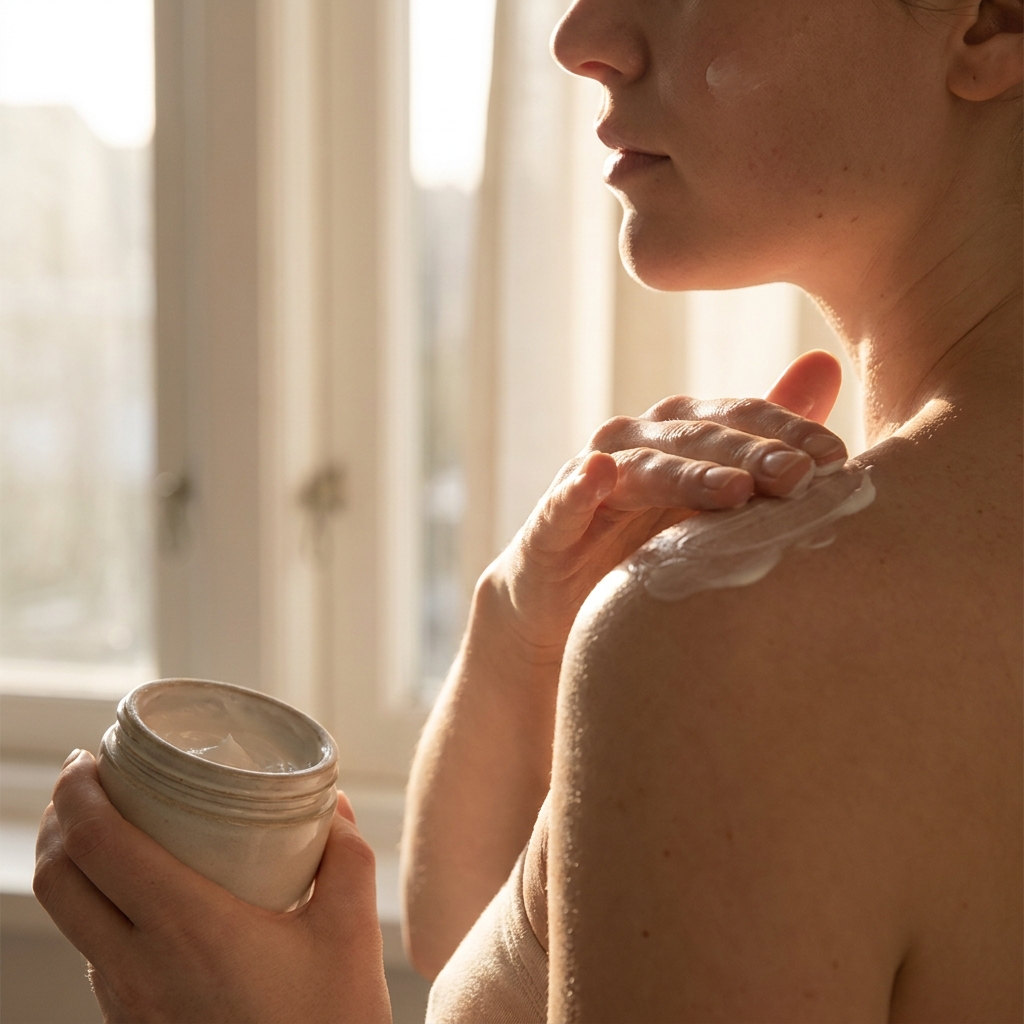
The cream helps the surface. The repair happens in your tissue, driven by the growth-hormone pulse in deep sleep and the nightly drop in cortisol that otherwise breaks collagen down. A $90 cream on five hours of sleep loses to a $0 routine on eight. Fix the hours first.
UV drives most visible skin aging: wrinkles, sagging, and uneven tone are largely accumulated sun damage, not the passage of time alone. The strongest single piece of evidence is a 4.5-year randomized trial of 903 adults, where daily broad-spectrum sunscreen produced 24% less skin aging than discretionary use, with no detectable increase in the daily group (Hughes 2013). Antioxidants add a second layer: vitamin C helps neutralize UV-generated free radicals, and omega-3 raises the dose of UV needed to burn. Neither replaces the sunscreen. They work behind it.
Once sunscreen, sleep, and a normal diet are in place, a short list of supplements has enough evidence to consider. Start with one, give it 8 to 12 weeks, and judge it on hydration and elasticity rather than wrinkles.
Diet, sleep, and supplements work at the margins of skin and hair. Some changes need a diagnosis. See a clinician if you notice any of the following:
This is educational information, not medical advice. Talk to a qualified healthcare professional before changing your treatment, medication, or supplement routine, especially if you are pregnant, nursing, or managing a health condition.