Sleep & Recovery

How your sleep works, and what actually moves it

Your brain runs 4-6 sleep cycles a night, each one doing different work. The three biggest levers are free: morning light, a cool dark room, and cutting caffeine by early afternoon.

Restful sleep environment
The short version
Sleep cycles every 90 minutes. Deep slow-wave sleep dominates the first half and drives physical repair. REM grows toward morning and handles memory and mood. Cut your night short and you lose mostly REM.
Sleep debt repays slowly. Research shows it takes several days to recover from a single hour of lost sleep. Weekend catch-up does not reverse the metabolic or cognitive cost of chronic restriction.
Three free levers move sleep most. Bright morning light anchors your clock, a cool dark bedroom at night lowers arousal, and cutting caffeine 8 to 10 hours before bed protects deep sleep.
Temperature triggers sleep onset. You fall asleep easiest when core temperature is dropping. A cool room and a warm pre-bed shower both drive that drop, just by different mechanisms.
Most adults need 7 to 9 hours. Fewer than 3% carry the genetic variant that makes 6 hours adequate. Most people who believe they function fine on 6 have adapted to feeling impaired.
Alcohol is a false friend. A nightcap helps you fall asleep faster, then suppresses REM and fragments the back half of the night, so you wake unrefreshed even after a full eight hours.
90 min one full sleep cycle, repeated 4–6× per night
13–23% of total sleep is deep (slow-wave) on a normal night
20–25% of total sleep is REM, growing in the second half
Sleep architecture

What actually happens when you sleep

Each 90-minute cycle front-loads deep slow-wave sleep early in the night, then shifts toward REM. Cutting the night short steals mostly from REM.

Hypnogram

Sleep stage chart

Total sleep7.5h
0h1h2h3h4h5h6h7h8h
0.9h
Deep sleep (~12% of night)
1.2h
REM sleep (~16% of night)
4
Complete cycles (~90 min each)
Awake
REM
Light
Deep
Hover chart or tap a stage to learn more
Light sleep (NREM 1–2), transition between wakefulness and deeper sleep; sleep spindles protect you from noise disruptions
Deep sleep (NREM 3–4), hardest to wake from; physical repair, immune function, growth hormone release; most of it is in the first two cycles
REM sleep, brain activity resembles waking; memory consolidation, emotional processing, learning; lengthens in later cycles
By age

Sleep requirements by age group

The '8 hours for everyone' rule is a population average, not a personal prescription. Here is what the evidence actually supports for each age group.

By age group

Sleep requirements by age

79hrecommended per night
(National Sleep Foundation)
0h2h4h6h7h8h9h10h12h
Hours of sleep (0–12h scale)
Seven to nine hours remains the population recommendation. The "I only need 6" belief is common but mostly wrong, fewer than 3% of people carry a genetic variant that makes 6 hours genuinely adequate. Most adults who think they function fine on 6 hours have simply adapted to feeling impaired.Source: National Sleep Foundation Sleep Duration Recommendations (2015)
Common myth

"I only need 6 hours."

Fewer than 3% of people carry the DEC2 gene variant that makes 6 hours genuinely adequate. Most adults who believe this have adapted to chronic sleep restriction, they feel normal, but cognitive testing shows measurable impairment. If you need an alarm clock and caffeine to function, you are not in the 3%.

Find your gap

Calculate your weekly sleep debt

Sleep debt accumulates night over night. It takes several days to recover from even a single lost hour, and weekend catch-up does not undo the metabolic cost.

Sleep

Sleep Debt Calculator

12.6
hours of weekly sleep debt
1.8h

nightly deficit when you sleep 6.2 hours but need 8.

12.6h

of weekly debt, about one and a half lost nights of sleep.

×

weekend catch-up did not reverse the metabolic cost in NIH-funded research.

Do this first

The five levers that move sleep tonight

Before any supplement, these inputs control most of your sleep quality. Get them consistent and many problems resolve on their own.

Light The master clock signal

Morning light tells your brain to stop producing melatonin, raise core temperature, and start the day. Outdoor light within an hour of waking, even on a cloudy day, 10,000 lux vs. indoor 500 lux, anchors your circadian rhythm so you feel sleepy at a reasonable hour.

At night, bright overhead lighting and screens suppress melatonin and push your clock later. Dim, warm-toned light in the last 1–2 hours before bed meaningfully advances melatonin onset. The room matters more than the screen filter.

Action: Get outside within 60 min of waking. Dim lights by 9 pm. Keep screens below eye level or use night mode.
Temperature The gate for falling asleep

Core body temperature needs to drop roughly 1–2°F to initiate sleep. You fall asleep easiest in the window when your temperature is naturally falling. A cool bedroom (65–68°F / 18–20°C) acts as a passive thermostat aid.

A warm shower or bath 60–90 minutes before bed is counter-intuitive but well-studied: the warmth pulls blood to the skin surface, which accelerates core temperature drop afterward. Trials report falling asleep ~10 minutes faster on average with this protocol.

Action: Set the bedroom to 65–68°F. Take a warm shower ~1 hour before bed if onset is slow. Avoid intense exercise in the last 2 hours.

Caffeine A slower problem than it feels

Caffeine blocks adenosine receptors, the signal that builds sleep pressure across the day. Its half-life runs 5–7 hours, so a 200 mg dose at 2 pm still leaves ~50 mg in your system at midnight. Evening caffeine also delays your circadian clock directly: a double-espresso dose three hours before bed shifted melatonin rhythm ~40 minutes later in a controlled crossover study.

That means late caffeine hurts both how fast you fall asleep and the depth of the sleep you get. Use the calculator to see exactly how much is still circulating at your bedtime.

Caffeine

Caffeine at Bedtime Calculator

53
mg still in your system at bedtime (7.5 h later)
Based on a 5-hour half-life.

Action: Stop caffeine 8–10 hours before bed. If you train in the afternoon, move your pre-workout earlier or switch to lower-caffeine options post-noon.

Alcohol Fast asleep, poorly rested

Alcohol sedates quickly, which people confuse with sleep quality. It suppresses REM in the first half of the night, then rebounds in the second half, causing fragmented, lighter sleep and early-morning waking. Wearable data from large populations consistently shows that even one drink measurably reduces HRV and sleep quality scores.

The effect is dose-dependent and larger in women than men on average. There is no meaningful threshold below which alcohol is truly sleep-neutral.

Action: Stop drinking at least 3 hours before bed. The closer to bedtime, the greater the REM disruption in the back half of the night.

Timing Consistency beats duration

Your circadian rhythm is strongest when you sleep and wake at consistent times every day, including weekends. Swinging 2+ hours on weekends creates "social jet lag", a circadian disruption with measurable metabolic and cardiovascular consequences independent of total sleep time.

Pick a wake time you can hold 7 days a week and build backward to a bedtime that gives you enough hours. Light exposure at that consistent wake time is the most powerful signal to lock the rhythm in place.

Action: Set a fixed wake time. Allow no more than 30–45 minutes of weekend variation. Avoid naps longer than 20–30 minutes, and not after 3 pm.

Evening protocol

A personalized wind-down plan

Set your target bedtime and get a timed, evidence-based wind-down sequence built backward from it. Tap any step to see the why behind it.

Wind-down

Personalized wind-down plan

Wind-down plan builds backward from this time.
Avoid
Environment
Body
Supplement
12:30 pm
Last caffeine
Avoid
7:30 pm
Finish large meals
Avoid
7:30 pm
Last alcohol
Avoid
8:30 pm
Dim the lights
Environment
8:30 pm
Stop blue-white screens or use warm light filter
Environment
9:00 pm
Warm shower or bath
Body
9:30 pm
Magnesium + sleep supplements
Supplement
9:30 pm
Wind-down activity
Body
10:00 pm
Cool the room
Environment
Bedtime
10:30 pm
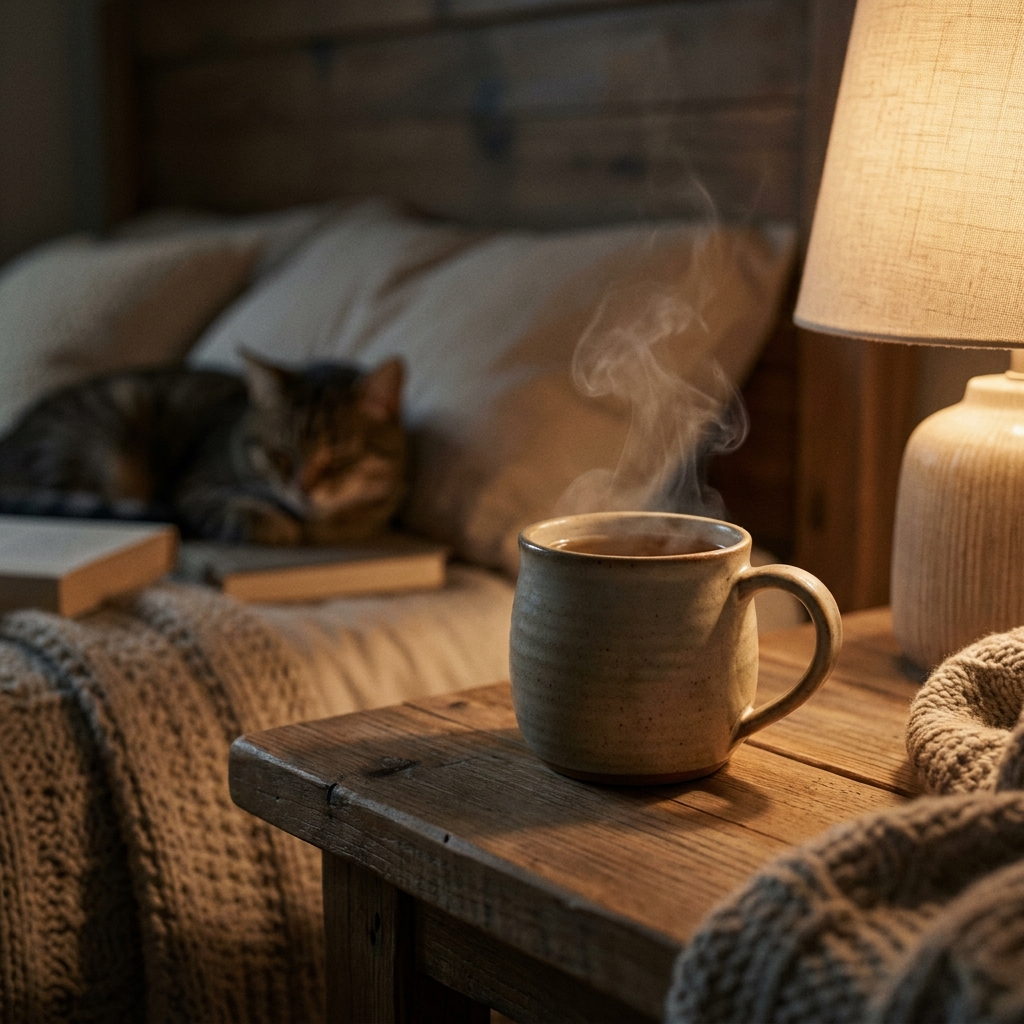
Warm tea and dim light, part of an evening wind-down routine
Why the order matters
  • Light and temperature set your clock. Dim warm light after sunset and a cool room signal the brain that sleep is coming. Bright light or heat this late delays melatonin by 30–60 minutes.
  • Caffeine and alcohol fragment your sleep. Caffeine still blocks adenosine 8–10 hours after you drink it. Alcohol sedates fast but collapses REM in the back half of the night.
  • The last hour should lower arousal. Your nervous system needs time to downshift. High-stimulation inputs like work, arguments, or thriller content keep cortisol elevated and delay sleep onset even after you close your eyes.
The last layer

Where supplements fit, and where they don't

Supplements are the last layer. Use them once light, temperature, caffeine, and schedule are dialed. The comparison below shows which magnesium form to start with.

Form comparison

Magnesium forms for sleep

FormSleep pick
Mg glycinate
Sleep pick
Mg L-threonate
Mg citrate
Mg oxide
Absorption
High
Brain-targeted
Good
Low (~4%)
Sleep evidence
Moderate (B)
Moderate–Good (B)
Limited (C)
Weak (C)
GI tolerance
Excellent
Very good
Fair (mild laxative)
Poor (strong laxative)
Best forSleep, relaxation, muscle tension, general repletionCognitive function, memory, sleep quality, brain agingGeneral repletion, digestive regularity, muscle relaxationAntacid, constipation relief
Typical dose200–400 mg elemental Mg1.5–2 g (product; ~144 mg elemental Mg)200–400 mg elemental MgNot recommended for sleep
Timing30–60 min before bedSplit: half morning, half eveningEvening; reduce dose if stools loosenN/A for sleep

Tap a column header for details on each form.

Sources: Examine.com magnesium overview; Zhu et al. (2024) Mg-L-threonate RCT, PMC11381753; Abbasi et al. (2012) Mg glycinate insomnia trial, PMC3703169; NIH ODS Magnesium fact sheet.

These statements have not been evaluated by the Food and Drug Administration. This information is not intended to diagnose, treat, cure, or prevent any disease.

Circadian rhythm

Why morning light matters more than you think

Morning sunlight anchors the circadian clock

Your circadian clock syncs to outdoor light in the morning: within 60 minutes of waking, sunlight stops melatonin production and starts the 16-18 hour countdown to when you feel sleepy that evening. Indoor light tops out around 500 lux. A cloudy-day walk hits 1,000+ lux, which is enough to anchor your rhythm. A 10-minute walk outside beats any lamp.

Red flags

When to see a doctor

Lifestyle and supplements address the common causes of poor sleep. Seek evaluation from a clinician if you experience any of the following:

  • Persistent insomnia, difficulty falling or staying asleep most nights for more than 4 weeks despite good sleep habits. Cognitive behavioral therapy for insomnia (CBT-I) has stronger long-term evidence than any medication.
  • Loud snoring with gasping or breathing pauses, a partner's observation is the most common early signal of obstructive sleep apnea. Untreated sleep apnea carries serious cardiovascular and metabolic consequences. A home sleep test is now accessible through many primary care providers.
  • Unrefreshing sleep, consistently waking unrestored despite adequate hours in bed may indicate sleep apnea, restless leg syndrome, or other sleep disorders that require polysomnography to diagnose.
  • Excessive daytime sleepiness, falling asleep unintentionally during the day, especially in low-stimulation situations, is not normal and warrants evaluation.

This is educational information, not medical advice. Talk to a qualified healthcare professional before changing your treatment, medication, or supplement routine, especially if you are pregnant, nursing, or managing a health condition.

Frequently asked questions
How many hours of sleep do I actually need?
Most adults do best on 7–9 hours. The right amount is what lets you wake without an alarm feeling rested and stay alert through the day, without caffeine propping you up. Consistency matters as much as total hours: a steady schedule beats swinging between short weeknights and long weekends.
What is sleep debt, and can I repay it on the weekend?
Sleep debt is the cumulative deficit between how much sleep you get and how much your body needs. A long weekend lie-in lifts mood and clears some fog, but studies tracking metabolism found recovery sleep failed to reverse the weight-gain and insulin-sensitivity effects of weekday restriction. Vigilance and reaction time also stay impaired in many people after a weekend of recovery sleep. Consistency beats catch-up.
Is deep sleep or REM sleep more important?
Both, for different jobs. Deep slow-wave sleep drives physical repair and concentrates early in the night. REM supports memory consolidation and emotional processing and concentrates in the second half. Cutting your night short steals REM preferentially; poor early sleep costs you deep sleep. Protecting full, uninterrupted cycles gives you both.
How does caffeine affect sleep beyond keeping me alert?
Caffeine blocks adenosine receptors, the signal that builds sleep pressure across the day. It also delays your circadian clock directly: a double-espresso dose three hours before bed shifted melatonin rhythm roughly 40 minutes later in one controlled study. So late caffeine hurts both how fast you fall asleep and the depth of the sleep you get. Aim to stop 8–10 hours before bed.
Does melatonin actually work for sleep?
It works as a timing signal more than a sedative. Meta-analyses show modest effects: sleep latency falls by only a few minutes on average. It is most useful for timing-related situations like jet lag or a body clock that runs late. Low doses, around 0.3–1 mg taken 1–2 hours before bed, often outperform the 5–10 mg doses commonly sold, which are likely supraphysiologic.
Which supplement has the best evidence for falling asleep faster?
Glycine has the cleanest small-trial support for sleep onset: about 3 g taken an hour before bed was associated with shorter sleep latency and better subjective sleep quality. Magnesium glycinate is the other strong starting point, with good tolerability and a plausible mechanism via NMDA antagonism and GABA support. Try one compound at a time so you can tell what works.
What temperature should my bedroom be for sleep?
Most adults sleep best between 65–68°F (18–20°C). Core body temperature needs to drop 1–2°F to initiate sleep, and a cool room acts as a passive thermostat aid. A warm shower about 60–90 minutes before bed helps by drawing blood to the skin and accelerating the core temperature drop afterward.
When should I see a doctor about my sleep?
Talk to a clinician if you have persistent trouble falling or staying asleep despite solid sleep habits for several weeks; if your bed partner notices loud snoring, gasping, or breathing pauses (possible sleep apnea); or if you feel consistently unrefreshed after a full night. These patterns go beyond what lifestyle and supplements can address and warrant proper evaluation.