Gut & Immunity

Your gut runs on what you feed it

A diverse microbiome tracks with better digestion, a steadier immune response, and lower inflammation. You build it with fiber and plant variety, not with a single bacterium in a capsule.
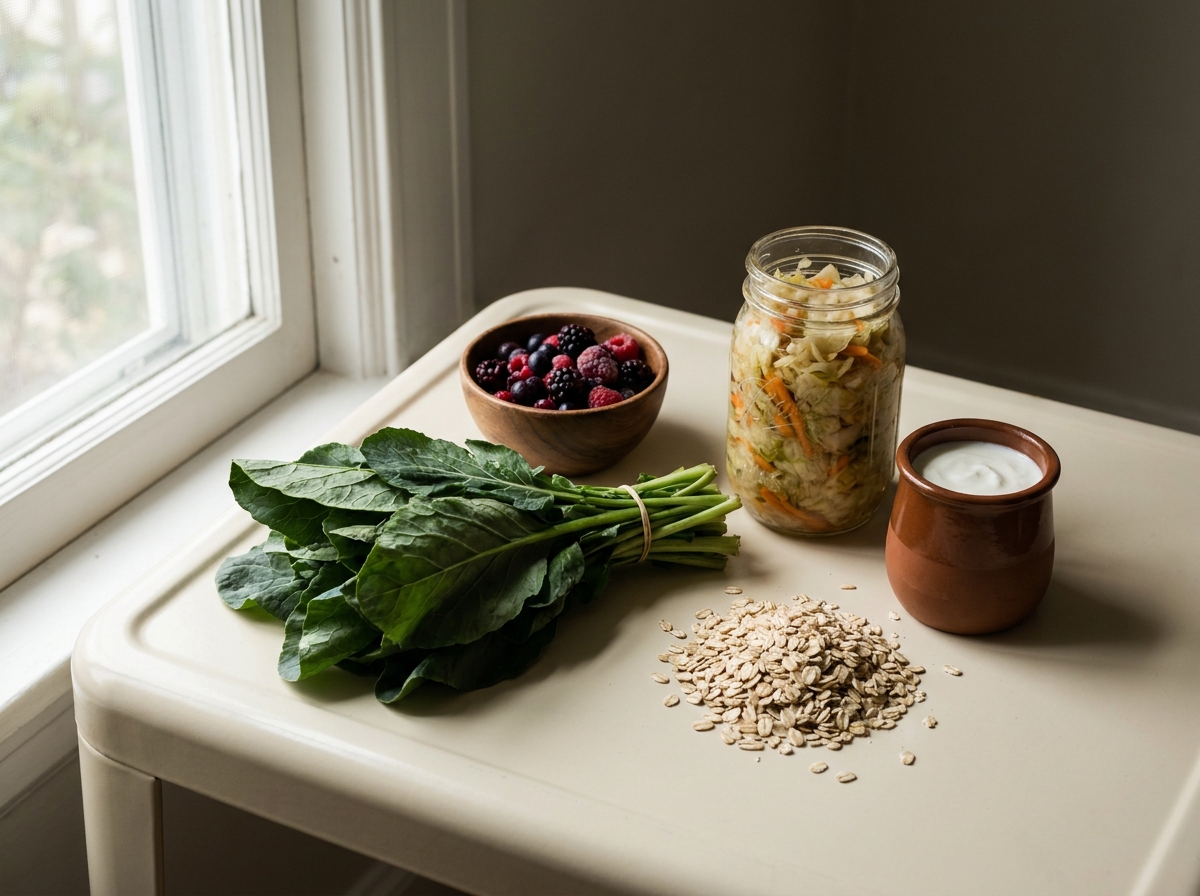
A spread of high-fiber plant foods
The short version
Diversity is the headline metric. A wider range of microbial species tracks with better digestion, a calmer immune response, and steadier metabolism. You build it by eating a wider range of plants, not by buying one bacterium in a capsule.
Fiber is the fuel your microbes run on. Gut bacteria ferment fiber into short-chain fatty acids like butyrate that feed your colon lining and quiet inflammation. Most US adults eat about 17 g a day, half the target.
Most of your immune system lives in the gut. Gut-associated lymphoid tissue holds close to 70% of your immune cells. The bacteria there train those cells, which is why diet shapes how your body handles inflammation.
Aim for 30 different plants a week. In the American Gut data, people eating 30+ plant types weekly carried more diverse microbiomes than those eating 10 or fewer. Variety beats volume: spices, nuts, and beans all count.
Fermented foods move the needle fast. A Stanford trial found 10 weeks of yogurt, kefir, kimchi, and kombucha raised microbiome diversity and lowered 19 inflammatory markers. The high-fiber arm did not match it on diversity.
Probiotic pills are strain-specific and modest. A generic probiotic is not a fix. Benefits depend on the exact strain and the outcome studied, and most do not durably colonize your gut. Food-first is the stronger play.
~70% of your immune cells live in gut-associated tissue
17 g average US daily fiber intake, about half the target
30+ plant types a week linked to the most diverse microbiomes
Find your gap

Calculate your daily fiber target

Fiber is the fuel your gut microbes ferment into short-chain fatty acids that feed your colon lining and lower inflammation. Most adults eat roughly half of what the evidence supports. Set your numbers and see exactly how to close the gap.

Fiber target calculator

Find your daily fiber gap

Your current daily fiber17 g/day
0 g68% of target25 g goal
17 gyou now
8 gshort of goal
25 gyour goal
Close a 8 g gap with whole foods. Add any mix below to reach 25 g:
  • Chia seeds (2 tbsp)+10 g
Target: IOM adequate intake, 14 g per 1,000 kcal. US mean intake ~17 g/day (NHANES 2017–2020).

Adequate intake is about 25 g a day for women and 38 g for men, per the Institute of Medicine reference of 14 g per 1,000 calories. Fiber feeds short-chain fatty acid production, the mechanism behind most of its gut benefit.

The gut-immune axis

Why your gut runs your immune system

Close to 70% of your immune cells sit in gut-associated lymphoid tissue lining your intestines, where they meet your microbes face to face. Those bacteria are not passive. They ferment fiber into short-chain fatty acids like butyrate, which strengthen the gut barrier and push immune cells toward regulatory T cells that keep inflammation in check. Raise your microbial diversity and you give that system more to work with: a Stanford trial saw fermented foods lower 19 inflammatory blood proteins in 10 weeks. Starve it of fiber and the balance tilts the other way.

Common myth

"A probiotic pill builds my gut."

Benefits are strain-specific and outcome-specific. Most generic capsules do not durably colonize your gut, and the effect fades when you stop. The microbes already living in you respond far more to the fiber and plant variety you feed them every day. Food first, supplements only for a documented goal.

Two levers

Fiber and fermented foods do different jobs

You want both. Fiber feeds the microbes you already have. Fermented foods add new ones and dial down inflammatory signaling. Here is what each does and where to start.

Fiber feeds your microbes

Soluble and fermentable fiber is broken down into short-chain fatty acids that nourish your colon lining and produce butyrate. Skimp on it and fiber-degrading bacteria fade.

Start with: oats, beans, lentils, berries, chia, and a fiber-rich whole grain at most meals.

Fermented foods add diversity

In a controlled trial, daily yogurt, kefir, kimchi, sauerkraut, and kombucha raised microbiome diversity and lowered 19 inflammatory blood proteins over 10 weeks.

Start with: a few small servings a day, larger servings showed stronger effects.

Variety beats volume

The American Gut data tied 30+ different plants a week to the most diverse microbiomes. Spices, herbs, nuts, and seeds all count toward the tally, not only vegetables.

Start with: rotate what you buy each week and track plant types, not calories.

Sources: Wastyk et al. (2021), Cell; McDonald et al. (2018), American Gut Project, mSystems.

Build the week

How many different plants are you eating?

Microbial diversity follows plant diversity. Tap what you have eaten this week across the groups below and watch the count climb toward 30, the threshold tied to the most diverse guts in the American Gut study.

Plant diversity tracker

Aim for 30 different plants a week

0of 30

Each new plant feeds a different microbe. Variety matters more than volume here.

Vegetables0/10
Fruit0/8
Legumes0/5
Whole grains0/5
Nuts, seeds, herbs0/10
Benchmark from McDonald et al. (2018), American Gut Project, mSystems.
Cut through the noise

What helps versus what is marketing

The gut-health aisle is crowded with claims. Here is how the common approaches sort out once you hold them against the evidence.

ApproachWhat the evidence showsVerdict
Eating more plant varietyMore plant types per week tracks with greater microbial diversity across diet patterns.Helps
Soluble and fermentable fiberFermented into short-chain fatty acids that feed the colon lining and lower inflammation.Helps
Fermented foods (yogurt, kefir, kimchi)A controlled trial raised diversity and cut 19 inflammatory proteins in 10 weeks.Helps
Strain-matched probiotics for a goalSpecific strains help specific outcomes, such as antibiotic-associated diarrhea.Situational
Generic "gut health" probiotic pillsMost do not durably colonize and benefits are strain- and outcome-specific.Marketing
Detox teas and colon cleansesNo evidence they improve the microbiome; can disrupt electrolytes and motility.Marketing
The last layer

Where supplements fit, and where they don't

Food variety and fiber do the heavy lifting. A few supplements have a real role for specific goals. Start one at a time so you can tell what works.

Red flags

When to see a doctor

Diet shapes the common drivers of gut discomfort. Some symptoms point past lifestyle and need a clinician:

  • Blood in your stool or black, tarry stools, which can signal bleeding anywhere along the digestive tract and always warrants evaluation.
  • Unexplained weight loss alongside gut symptoms, a red flag for malabsorption, inflammatory bowel disease, or other serious conditions.
  • Persistent change in bowel habits, diarrhea or constipation lasting more than a few weeks despite good fiber and fluid intake.
  • Severe or recurring abdominal pain, especially pain that wakes you at night or comes with fever, vomiting, or bloating.

This is educational information, not medical advice. Talk to a qualified healthcare professional before changing your treatment, medication, or supplement routine, especially if you are pregnant, nursing, or managing a health condition.

Frequently asked questions
What is the gut microbiome, and why does it matter?
The gut microbiome is the community of trillions of bacteria, fungi, and other microbes living mainly in your large intestine. They ferment the fiber you cannot digest, produce vitamins and short-chain fatty acids, and train your immune system. A more diverse community is linked with better digestion, steadier metabolism, and a more measured immune response. You shape it most through what you eat.
How much fiber do I actually need, and am I getting it?
The adequate-intake reference is about 25 g a day for women and 38 g for men, or 14 g per 1,000 calories. Between 2017 and 2020 the average US adult ate only about 17 g a day, roughly half the target. Use the calculator on this page to find your gap and the whole foods that close it. Ramp up slowly with plenty of water to limit gas and bloating.
Why does fiber matter so much for gut bacteria?
Fiber is the main fuel your gut microbes run on. When bacteria ferment soluble and fermentable fiber, they produce short-chain fatty acids, mainly acetate, propionate, and butyrate. Butyrate feeds the cells lining your colon, strengthens the gut barrier, and helps calm inflammation. Without enough fiber, fiber-degrading microbes decline and some bacteria start grazing on your protective mucus layer.
Is the "30 plants a week" target real or just a trend?
It comes from the American Gut Project, a citizen-science study of more than 10,000 people published in 2018. People who ate 30 or more different plant types per week had more diverse gut microbiomes than those eating 10 or fewer, regardless of whether they were omnivores or vegetarians. Plants count broadly: vegetables, fruit, legumes, whole grains, nuts, seeds, herbs, and spices all add to the tally.
Do fermented foods or fiber do more for the gut?
They do different jobs, and you want both. In a 10-week Stanford trial, the fermented-food group gained microbiome diversity and saw 19 inflammatory blood proteins drop. The high-fiber group did not raise diversity over the same window, though fiber remains the core fuel for short-chain fatty acid production. Fiber feeds the microbes you have; fermented foods add new ones and lower inflammatory signaling.
Should I take a probiotic supplement?
Often you do not need one. Benefits are strain-specific and outcome-specific: certain strains help with antibiotic-associated diarrhea or specific digestive complaints, but most generic "gut health" capsules do not durably colonize your gut and the effect fades when you stop. Match the strain to a documented goal if you take one. For general gut health, food variety, fiber, and fermented foods give a stronger return.
When should I see a doctor about gut symptoms?
See a clinician for blood in your stool, unexplained weight loss, persistent diarrhea or constipation lasting weeks, severe or recurring abdominal pain, or symptoms that wake you at night. These can signal conditions like inflammatory bowel disease, celiac disease, or other issues that diet alone will not resolve and that need proper evaluation.